Health financing in Africa as aid declines: what Ghana, Senegal and Kenya are building
African health systems need more domestic revenue, but raising it is only part of the challenge. The funds also have to be predictable enough to pool risk, pay providers on time and keep essential services running.
External health funding is falling faster than many national budgets had planned for. Githinji Gitahi of Amref Health Africa estimates that development assistance for health to Africa fell from USD 25.8 billion in 2021 to around USD 13 billion in 2025.1 Total official development assistance from OECD DAC members fell 23.1 percent in 2025, the largest annual contraction on record,2 while bilateral aid to sub-Saharan Africa is projected to fall a further 11.6 percent in 2026.3
This decline is happening in systems where households already carry a large share of the cost. In 2022, around 47 percent of health spending in Africa was paid out of pocket, compared with 32 percent from government and 15 percent from development assistance.4 Aid was never the continent’s largest source of health financing, but when external funding falls without a domestic replacement, the pressure is felt by patients and providers.
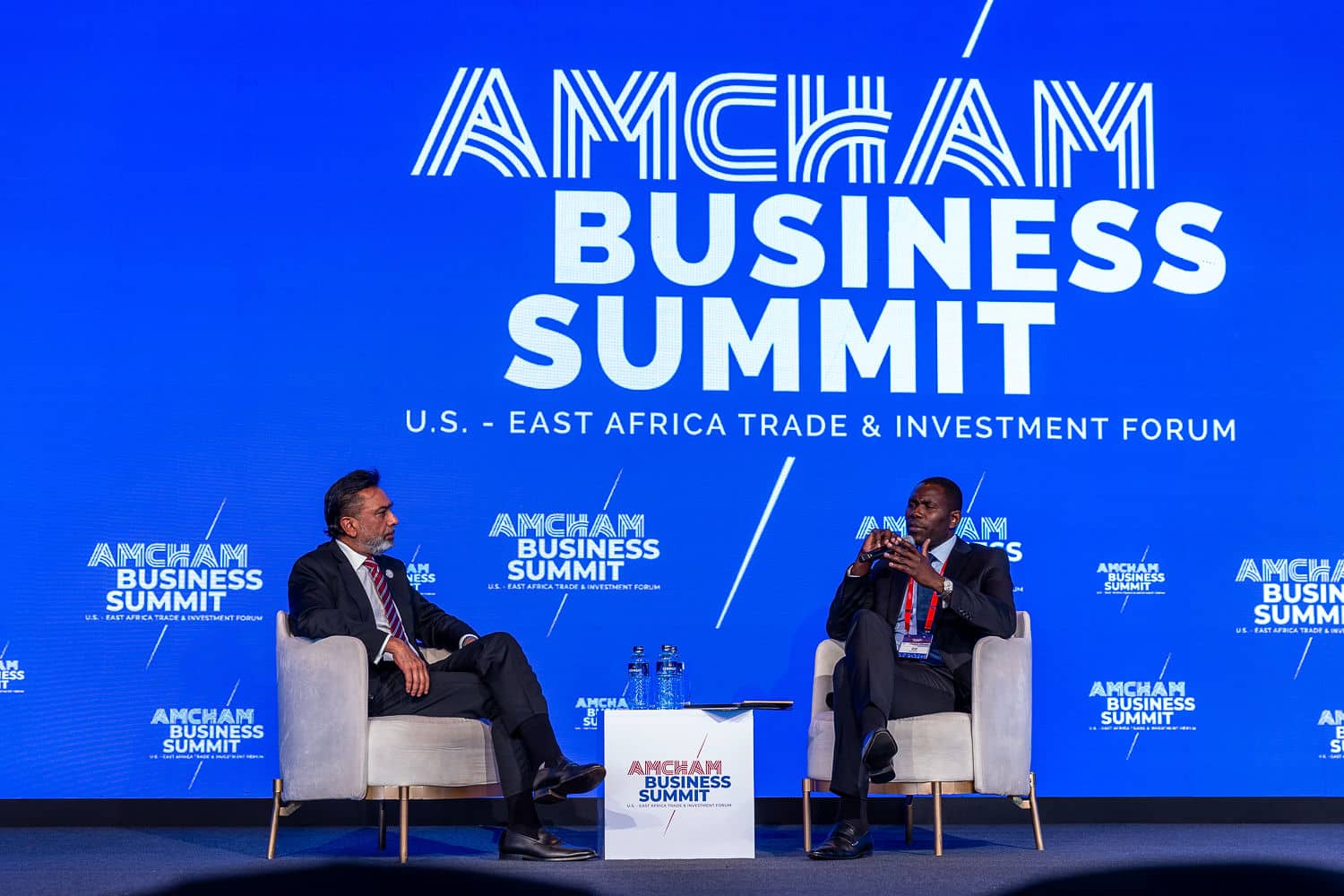
This was central to the closed-door ministerial session on health financing at the 76th session of the WHO Regional Committee for Africa in Addis Ababa in August 2026, moderated by Dr Amit Thakker. The discussion was no longer only about the decline in aid. It was about which financing mechanisms governments can legislate, collect, manage and sustain over time.
Commitments from the African Region
At RC76, Member States adopted the Strategy for Financing the Future of Health in the WHO African Region, 2026–2035 on 26 August 2026.5 The strategy sets out seven strategic action domains:12
- Health financing policy, process and governance
- Revenue raising
- Pooling revenues
- Purchasing and provider payment
- Benefits and conditions of access
- Public financial management
- Integrated public health functions and programmes
By 2035, the strategy aims for 56 percent of Member States to show a sustained increase in government health spending, 56 percent to improve financial protection, and 75 percent to have clearly articulated, up-to-date health financing priorities.12
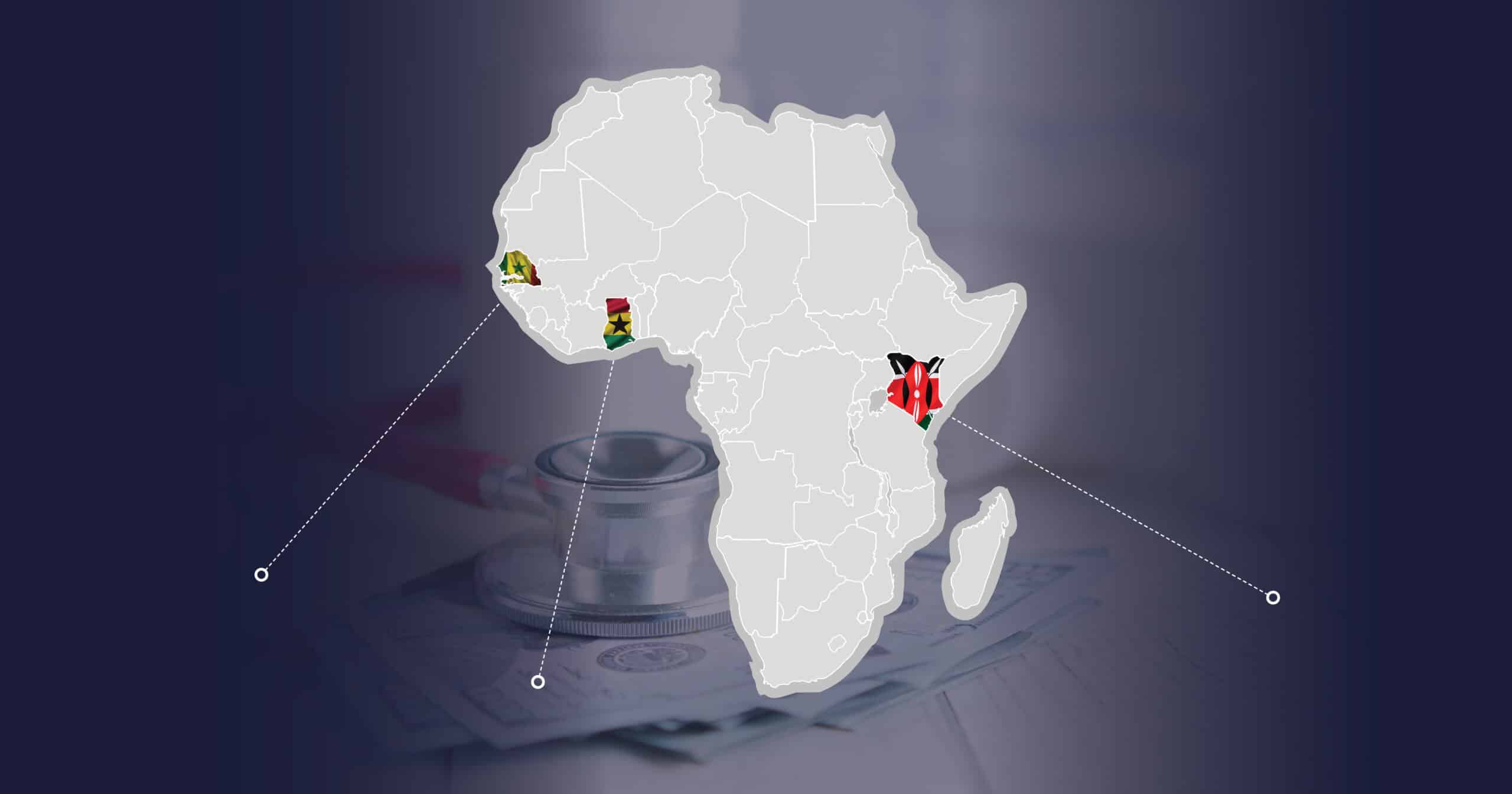
A levy or contribution rate on its own says very little about whether a financing reform will work. Revenue still has to be collected, pooled fairly, translated into payments that reach providers, and managed through public financial systems that can account for it. Ghana, Senegal and Kenya are useful examples because each is dealing with a different part of that chain.
Country | Mechanism | Rate or base | Introduced / latest change | Collected by | What it finances |
Ghana | National Health Insurance Levy (NHIL), alongside other NHIS funding sources | 2.5% on the VAT-exclusive price of taxable goods and services, earmarked for the National Health Insurance Scheme | 2003; levy uncapped in 2025 | Ghana Revenue Authority | NHIS benefits, provider claims and NHIA operations |
Senegal | Health-related excise taxation on tobacco and alcohol | 70% specific tax on imported tobacco; 50% excise on alcoholic beverages plus 800 FCFA per litre (6–15°) and 3,000 FCFA per litre (above 15°) | March 2025 customs circular under the General Tax Code | Tax and customs authorities | General government revenue; tobacco taxation identified in national planning as an endogenous health financing source, allocation mechanism not yet published |
Kenya | Social Health Authority contributions across three statutory funds | 2.75% of gross salary for salaried households; 2.75% of income for non-salaried households, uncapped | October 2024, under the Social Health Insurance Act | Social Health Authority | Primary Healthcare Fund; Social Health Insurance Fund; Emergency, Chronic and Critical Illness Fund |
Ghana: what changed when the levy was uncapped
Ghana’s National Health Insurance Levy is a 2.5 percent charge on the VAT-exclusive price of taxable goods and services and has funded the National Health Insurance Scheme since 2003. For years, transfers were capped, so not all revenue collected through the levy reached the scheme. Government removed the cap in 2025.6
The financial effect was visible quickly. The levy raised GH¢9.76 billion in 2025, up from GH¢6.52 billion in 2024. Over the following seven months, the National Health Insurance Authority disbursed more than GH¢1.5 billion to providers, including arrears that had led some private facilities to suspend NHIS services.6 Parliament subsequently approved GH¢9.2 billion for the National Health Insurance Fund for 2026.7
Ghana’s experience shows why the rules around an earmark matter as much as the rate itself. The levy did not increase in 2025. What changed was how much of the money collected was allowed to reach the fund. For countries considering earmarked health taxes, the lesson is to pay as much attention to caps, transfer rules and the risk of diversion as to the rate itself.
The question now is whether the change will hold. The cap had been introduced for fiscal management reasons and could be reinstated if public finances tighten. Provider payment performance over the next budget cycle will be the better test of whether it lasts.
Senegal: higher health taxes, but the allocation mechanism is still unclear
Senegal has focused on health-related taxation. A March 2025 customs circular applied a 70 percent specific tax to imported tobacco products and a 50 percent excise duty to alcoholic beverages, with an additional charge of 800 FCFA per litre on beverages between 6 and 15 degrees and 3,000 FCFA per litre above that.8
Government planning documents identify tobacco taxation as one of the domestic sources for financing health. What is not yet public is how that revenue moves into the health system: how much is allocated, through which transfer mechanism, on what schedule, and with what reporting.
This distinction is important. Higher excise rates can raise revenue and reduce consumption of harmful products even when the proceeds are not earmarked. For health financing, however, the next step is to define how the revenue is allocated, transferred and reported. Senegal has raised the tax. The financing mechanism around it is still to be completed, which is where the WHO strategy’s governance and public financial management priorities become relevant.
Kenya: broader contributions and a difficult transition
Kenya changed the contribution base and the way funds are pooled at the same time. Since October 2024, salaried households have contributed 2.75 percent of gross salary and non-salaried households 2.75 percent of income under the Social Health Insurance regulations, with no upper cap. The Social Health Authority manages three funds: the Primary Healthcare Fund, the Social Health Insurance Fund, and the Emergency, Chronic and Critical Illness Fund.16
SHA also inherited NHIF’s outstanding obligations. The transition has come with provider payment delays, disputed legacy claims and gaps in compliance among non-salaried contributors, who make up most of Kenya’s workforce.
Government reporting gives a sense of the scale, although the figures are not yet fully reconciled. At the Kenya Health Summit on 18 August 2026, President William Ruto said SHA had received more than KSh209 billion since October 2024 and paid more than KSh178 billion to contracted facilities.13 A Ministry of Health update on 31 August reported a 78 percent claims settlement rate across the 47 counties, with KSh159.3 billion paid.14 The two payment figures appear to use different reporting scopes and should not be treated as directly comparable without a published reconciliation.
The NHIF legacy debt remains part of the transition. By 31 August, reconciliation and sign-off had been completed for claims of KSh10 million and below across 3,526 facilities; 3,058 facilities had received KSh3.63 billion.14 A further verification exercise for higher-value claims of KSh10 million and above was scheduled from 21 September, covering 451 facilities.15 A consolidated current value for those higher-value claims has not been publicly released.
Claims integrity has been the most demanding part of the transition. A Ministry of Health audit found that KSh11 billion was lost to fraudulent claims in SHA’s first six months of operation, between October 2024 and April 2025.17 Health Cabinet Secretary Aden Duale set out the patterns in January 2026: outpatient care billed as inpatient admissions, procedures billed but not performed, maternity units recording caesarean rates far above clinical norms, and health workers registering themselves as patients.18 The response has included barring individual practitioners from the claims portal, suspending facility contracts, referring case files to the Directorate of Criminal Investigations and prosecuting a first group of suspects.17
This sits in the same conversation as revenue. Fraud on this scale is a purchasing and provider payment problem, which is where the WHO strategy places it. A contributory scheme that contracts a large provider network quickly is exposed from the first claim onward, and the controls that limit that exposure, including provider accreditation and verification, adjudication rules, documentation standards, audit capacity and the power to suspend payment, need to be working before claim volumes build rather than added afterwards. Kenya has been putting them in place while the scheme runs. Countries designing social health insurance now have the option of doing it in the other order.
The harder issue in Kenya is the contribution base. An uncapped percentage can raise more revenue from formal salaries, but formal payroll covers only a minority of workers. For households outside payroll, the system still needs a workable collection mechanism, subsidised enrolment funded from general revenue, or a combination of both. The 2.75 percent rate alone does not solve that.
Private capital in the financing mix
Private providers account for a significant share of care in many African countries. A review of survey data from 26 countries in the WHO African Region, covering 2010 to 2019, found that the private sector provided around 26 percent of all care and 35 percent of outpatient care. The share varied widely: more than 40 percent of care was sought privately in Cameroon, Uganda and Benin, and 52 percent in Nigeria.9
Public financing schemes therefore purchase services from a mixed provider market. Ghana’s NHIS reimburses private facilities, and Kenya’s SHA is being implemented across both public and private providers. Contracting terms, reimbursement rates, claims processing and payment timelines therefore sit at the centre of health financing.
Private capital can also add financing capacity to the system. One useful example comes from India. SAMRIDH, the blended finance facility established under the USAID-supported Partnerships for Affordable Healthcare Access and Longevity (PAHAL) programme and implemented by IPE Global, grew to more than USD 300 million. It supported over 60 health enterprises across 28 states, committed more than USD 16 million in philanthropic capital, and reported reaching around 12 million people directly and 25 million indirectly, while supporting improvements in more than 1,500 health facilities and training over 26,000 health professionals.10,11
Already in March 2023, AHB supported IPE Global to bring the blended finance discussion to Kenya through a South-South learning exchange built around the SAMRIDH experience.
AHB provided technical oversight for the convening, including identifying and briefing speakers, coordinating participation and making sure the right mix of financing, health and market perspectives was represented in the room. AHB also documented the action points coming out of the discussion, setting out practical activities needed to take blended finance further in Kenya. The assignment was a convening and learning engagement; it did not include establishing a financing facility or building an investment pipeline.
The point of the India example is the financing structure, not the scale. Public or philanthropic capital can absorb first-loss risk and make it possible for commercial lenders to finance health enterprises they would otherwise consider too risky or too expensive. The type of capital also needs to match the stage of the business: grants and advisory support for early ventures, patient or impact capital before revenues are established, and commercial debt once a business can demonstrate revenue and repayment capacity.
The harder part to replicate is the environment around the facility. India has a deep domestic capital market and a large regulated health enterprise sector. In Kenya, Ghana or Senegal, the investment pipeline, regulatory conditions and financing structure would need to be developed together. Private capital is most useful where it adds to domestic public financing without weakening public accountability or financial protection.
Implementation requirements
The WHO strategy sets a common regional direction, but implementation will be decided country by country. Each government still has to translate the objectives into financing arrangements that fit its fiscal space, tax base, labour market, health needs and administrative capacity.
For Ghana, the immediate issue is protecting the more predictable flow of funding created by uncapping while managing the wider fiscal constraints around earmarking. For Senegal, it is defining how health-related tax revenues will be tracked, allocated and reported. For Kenya, it is improving compliance among non-salaried contributors and keeping benefits and provider payments in line with the revenue actually collected.
Across all three countries, the common issue is implementation. Much of the policy framework is already in place. What now matters is whether the different parts work together: better expenditure data, credible costing, stronger public financial management, clear purchasing rules, and regular coordination between ministries of health and finance, revenue authorities, insurers and providers.
Sharing lessons learnt
Ghana, Senegal and Kenya are not models to copy. Their financing mechanisms reflect different fiscal structures, political economies and institutional capacities. Their value is in the practical questions they raise for other countries: which revenue base is realistic, whether and how funds should be earmarked, how pooling should work, who purchases services, how providers are paid, and how health financing can be protected when fiscal conditions tighten.
Countries can learn from each other’s experience, especially where ministries of health and finance are dealing with similar questions in different ways. AHB has used the AHB Symposium and other policy and business platforms to make those exchanges practical, including discussions through AMCHAM and at African Union-level engagements in Ghana. At RC76 in Addis Ababa in August 2026, Dr Amit Thakker moderated the closed-door ministerial discussion on health financing. The value is in bringing the health, finance, provider and investor perspectives together early, so that the discussion stays focused on what can realistically be financed and implemented.
The move away from aid dependence will not happen in one step, and domestic revenue will not completely replace external assistance. External funding will remain important, particularly for countries and programmes with high financing needs. The bigger change is the gradual shift towards financing systems that are more domestically funded, predictable and accountable. The real test will be whether reforms announced today are backed by institutions and public financial systems that can sustain them over the next decade.
AHB works with governments, investors and health companies on health financing, provider payment, market access and public-private financing arrangements across Africa. For discussions on domestic financing reform, provider payment or the role of private capital in public health financing, contact bd@africahb.com.
References
- African Business, “The future of African healthcare in an era of resource scarcity” (Githinji Gitahi on development assistance for health). https://african.business/2026/03/trade-investment/the-future-of-african-healthcare-in-an-era-of-resource-scarcity
- OECD, “A historic decline in foreign aid: preliminary 2025 ODA data”. https://www.oecd.org/en/data/insights/data-explainers/2026/04/a-historic-decline-in-foreign-aid-preliminary-2025-oda-data.html
- OECD, “ODA projections for 2026 and the near term”. https://www.oecd.org/en/publications/oda-projections-for-2026-and-the-near-term_d7c74fa2-en/full-report.html
- ONE Data, “A hinge moment for Africa’s health security” (health spending composition, 2022, from WHO Global Health Expenditure Database). https://data.one.org/analysis/africa-health-security
- WHO Regional Office for Africa, “Securing the future of health in Africa through sustainable financing” (RC76, 26 August 2026). https://afro.who.int/news/securing-future-health-africa-through-sustainable-financing
- Ghana Business News, “Uncapping Health Insurance Scheme rakes in GH¢9.76b”. https://www.ghanabusinessnews.com/2025/10/16/uncapping-health-insurance-scheme-rakes-in-gh%C2%A29-76b-dr-bampoe/
- Citi Newsroom, “Parliament approves GH¢9.2bn for National Health Insurance Fund”. https://citinewsroom.com/2026/02/parliament-approves-ghc9-2bn-for-national-health-insurance-fund/
- AllAfrica, “Sénégal: Taxes sur le tabac et les alcools — modification de certaines dispositions du Code général des impôts”. https://fr.allafrica.com/stories/202503170208.html
- Frontiers in Medicine (2021), private sector share of care in the WHO African Region, 26 countries, 2010–2019 data. https://www.frontiersin.org/journals/medicine/articles/10.3389/fmed.2021.624285/full
- IPE Global, PAHAL / SAMRIDH programme, India. https://www.ipeglobal.com/partnerships-for-affordable-healthcare-access-and-longevity-pahal-sustainable-access-to-markets-and-resources-for-innovative-delivery-of-healthcare-samridh-india/
- SAMRIDH Healthcare Blended Finance Facility under the USAID-supported PAHAL programme — results summary. https://www.acceleratehss.org/wp-content/uploads/2023/11/SAMRIDH-Healthcare-Blended-Finance-Facility-under-USAID-supported-PAHAL-Program.pdf
- WHO Regional Office for Africa, “Strategy for financing the future of health in the WHO African Region, 2026–2035” (AFR/RC76/6, 6 July 2026). https://www.afro.who.int/sites/default/files/2026-08/AFR-RC76-6%20Strategy%20for%20financing%20the%20future%20of%20health%20in%20the%20WHO%20African%20Region.pdf
- Office of the President, Republic of Kenya, “Remarks by H.E. President William Ruto during the opening of the Kenya Health Summit”, 18 August 2026. https://www.president.go.ke/wp-content/uploads/REMARKS-BY-HIS-EXCELLENCY-HON.-WILLIAM-SAMOEI-RUTO-PhD-C.G.H.-PRESIDENT-OF-THE-REPUBLIC-OF-KENYA-AND-COMMANDER-IN-CHIEF-OF-THE-DEFENCE-FORCES-DURING-THE-OPENING-OF-THE-KENYA-HEALTH-SUMMIT.pdf
- Ministry of Health, Kenya, “National and County Governments Strengthen Coordination on Health Reforms”, 31 August 2026 (published 3 September 2026). https://www.health.go.ke/node/2592
- The Star, “SHA sets verification of NHIF claims above Sh10m from September 21”, 17 September 2026. https://www.the-star.co.ke/news/2026-09-17-sha-to-verify-nhif-claims-above-sh10m-from-sept-21
- Kenya Law, “The Social Health Insurance Regulations” (Legal Notice 49 of 2024, as amended). https://new.kenyalaw.org/akn/ke/act/ln/2024/49/eng@2025-02-28
- Daily Nation, “Fake claims, real theft: Sh11 billion stolen from SHA in six months”. https://nation.africa/kenya/news/fake-claims-real-theft-sh11-billion-stolen-from-sha-in-six-months-5340278
- Eastleigh Voice, “How Sh11 billion was lost to fraudulent hospital claims under SHA – CS Duale”, 28 January 2026. https://eastleighvoice.co.ke/health/281744/how-sh11-billion-was-lost-to-fraudulent-hospital-claims-under-sha—cs-duale